
Telling Time Worksheets
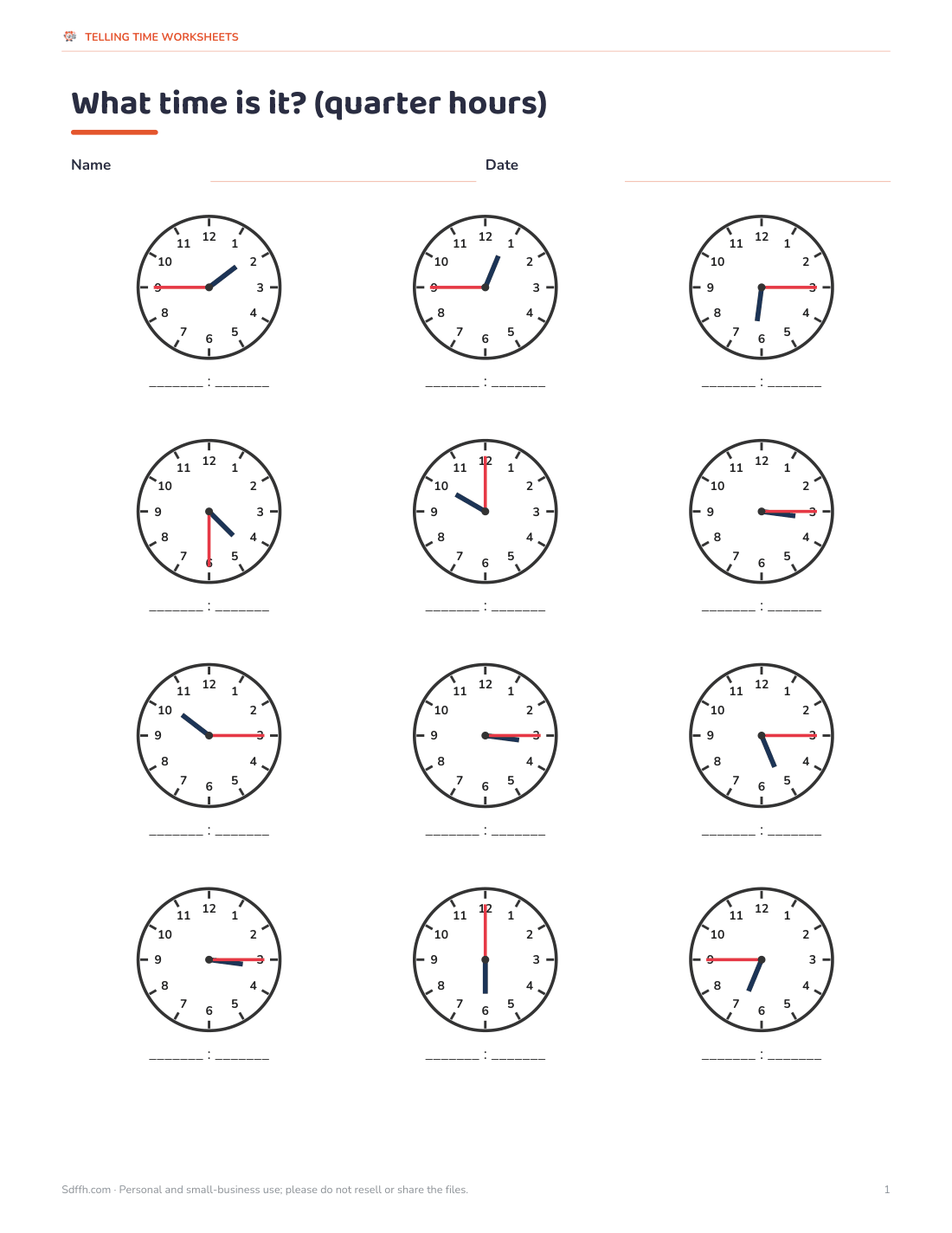
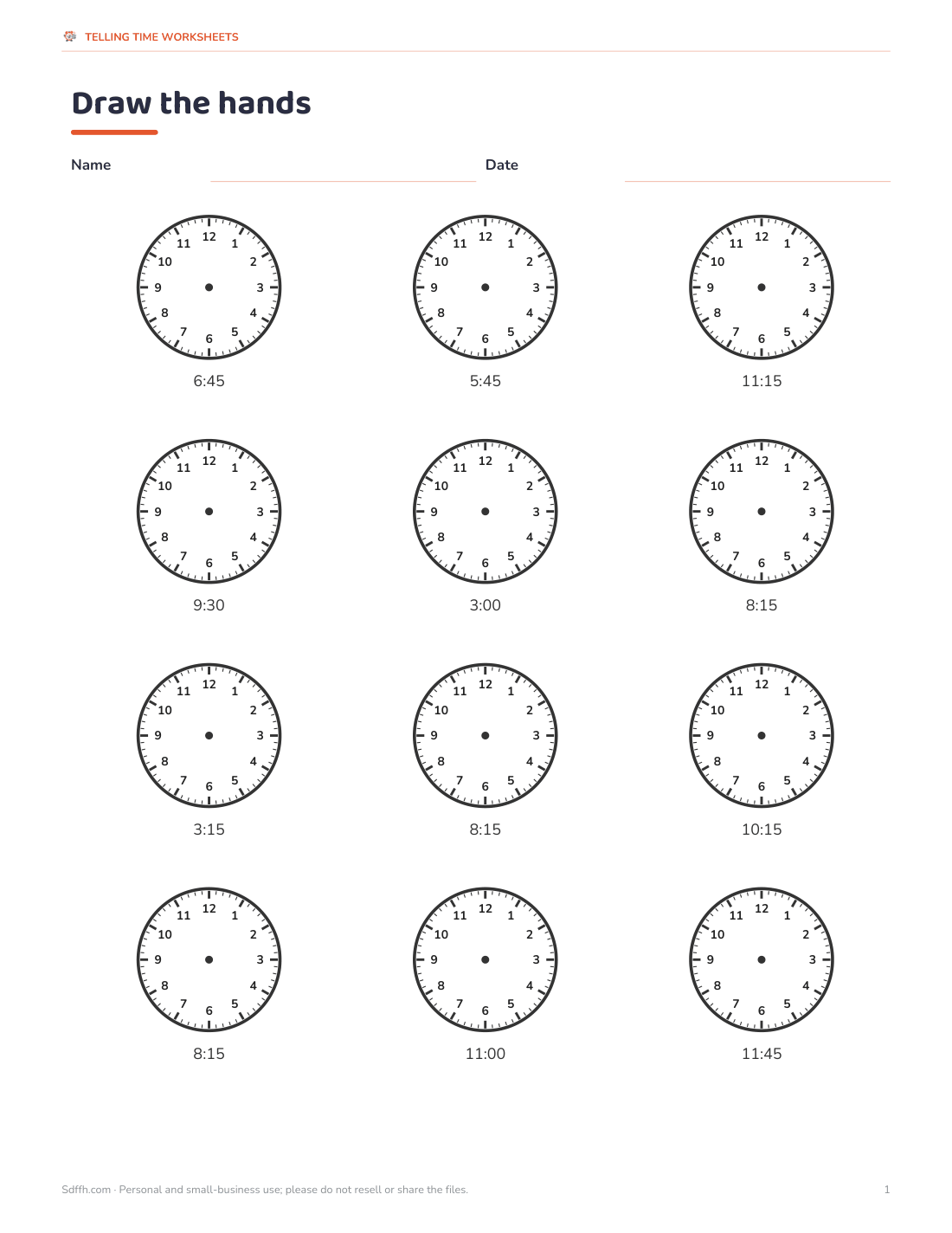
Clear, printable clock faces make learning to tell time easier. These worksheets progress from o’clock and half past to quarter past and quarter to, then to five-minute intervals and elapsed time. Children read the clock and write the time, or read the time and draw the hands — read-the-clock and elapsed-time sheets have answer keys; draw-the-hands sheets do not include model answers.
- Instant download
- Editable Word & Excel
- Print-ready PDF
- 7-day refund
14 resource files + README (15 files total) · PDF, DOCX, XLSX
Telling Time Worksheets
All 12 PDFs are free individually. The optional $5 ZIP adds an editable Word elapsed-time worksheet and a manual Excel progress tracker. Answer keys cover the four read-the-clock sheets and elapsed-time problems; draw-the-hands sheets do not include model-answer pages.
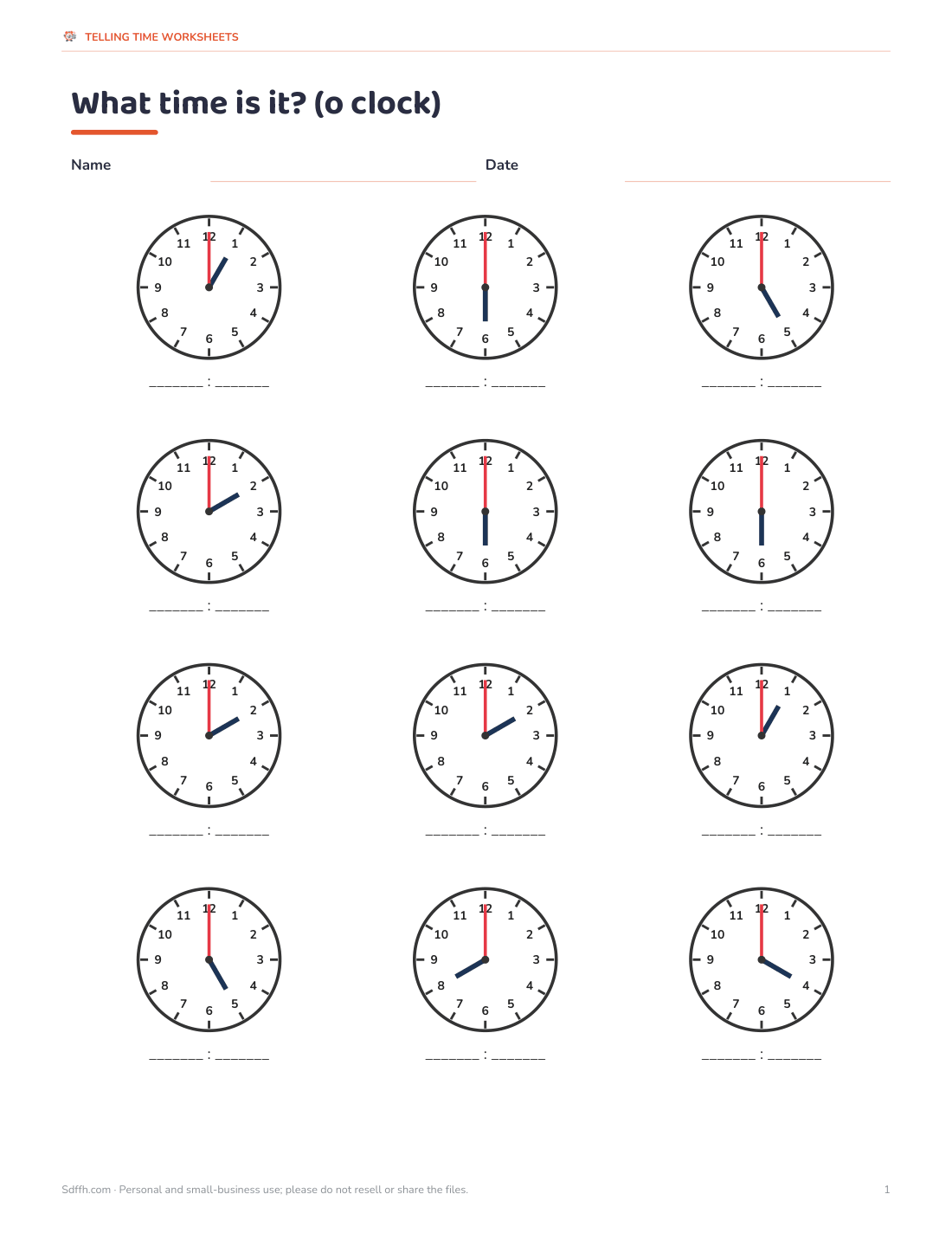
- Read the clock: O Clock (PDF)
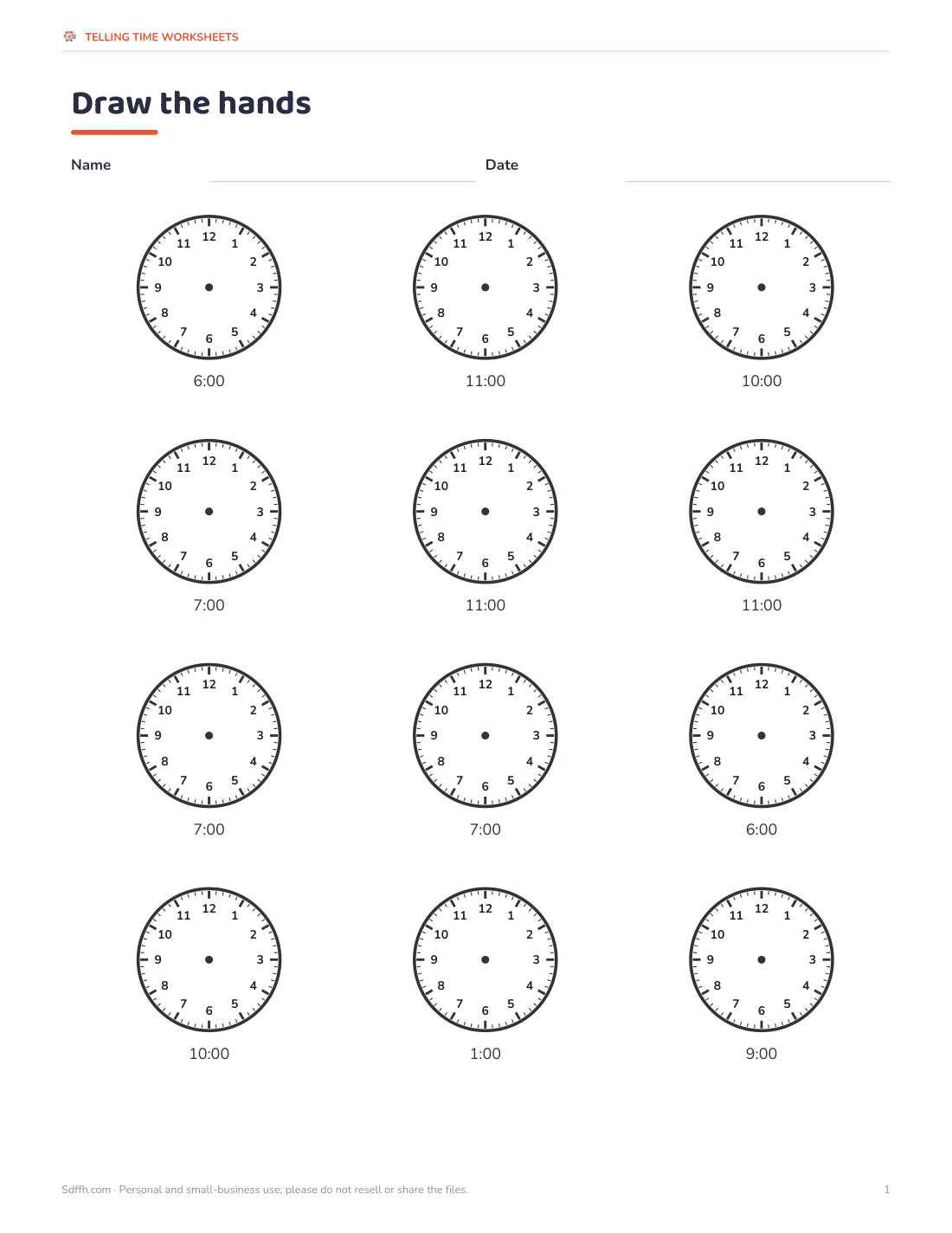
- Draw the hands: O Clock (PDF)
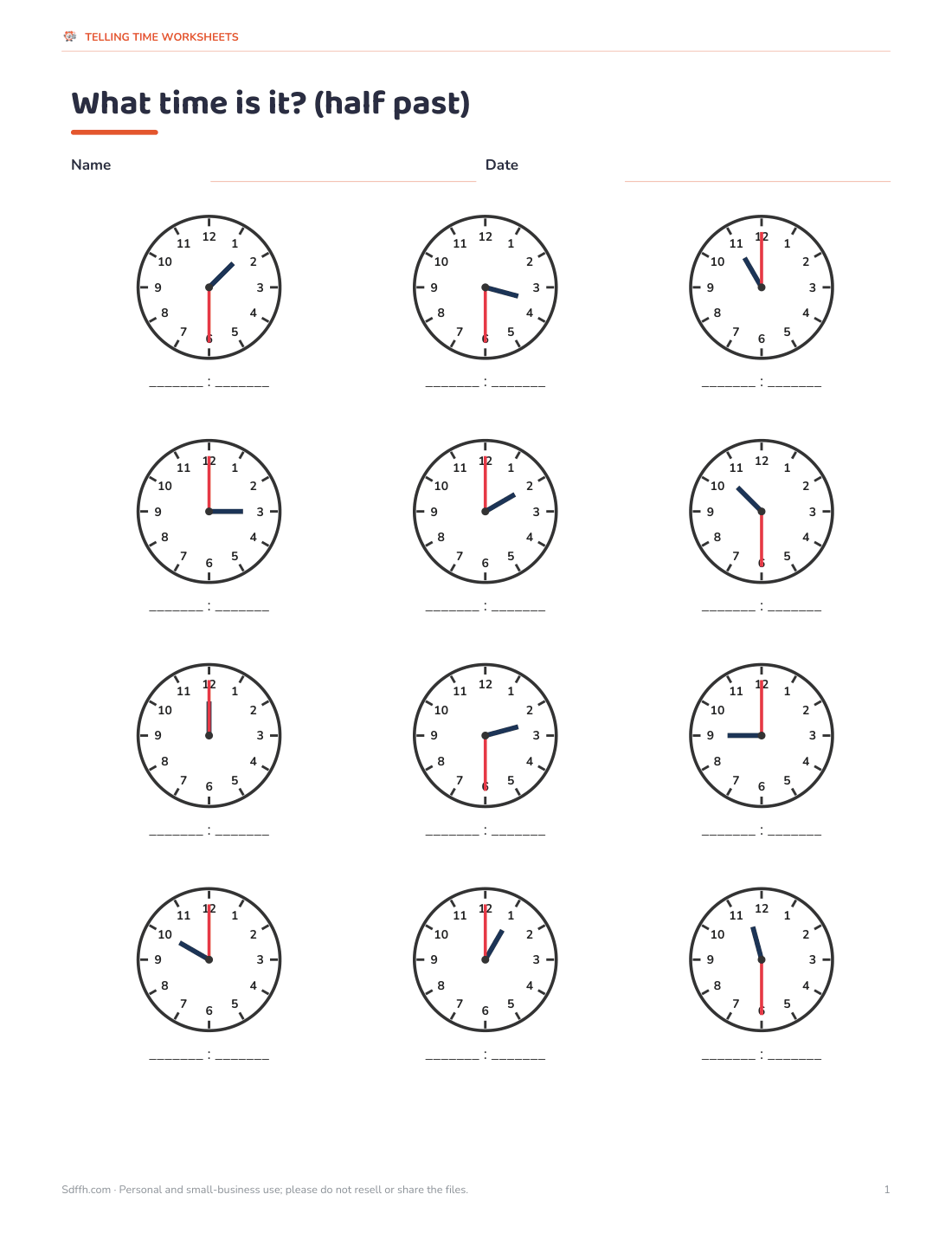
- Read the clock: Half Past (PDF)
- + 9 more
$5.00 USD, one-time 14 resource files + README (15 files total)
- Instant download
- 7-day refund
- Secure checkout by Stripe
7-day money-back guarantee. Full refund within 7 days of purchase, even after you download.
Free sample: Read The Clock O Clock (PDF, 65 KB)
Telling Time Worksheets
All 12 PDFs are free individually. The optional $5 ZIP adds an editable Word elapsed-time worksheet and a manual Excel progress tracker. Answer keys cover the four read-the-clock sheets and elapsed-time problems; draw-the-hands sheets do not include model-answer pages.
- Read the clock: O Clock (PDF)
- Draw the hands: O Clock (PDF)
- Read the clock: Half Past (PDF)
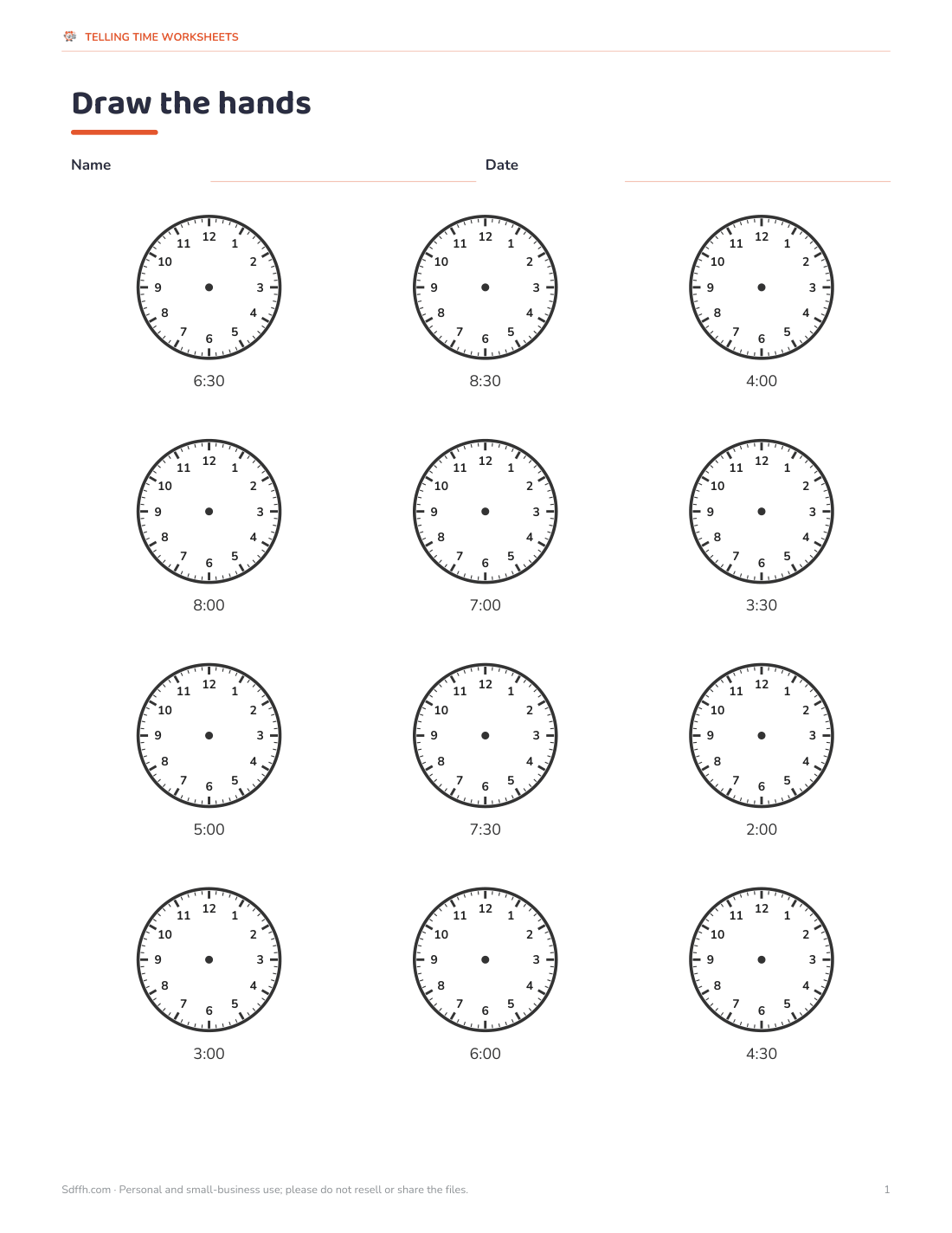
- Draw the hands: Half Past (PDF)
- Read the clock: Quarter Hours (PDF)
- Draw the hands: Quarter Hours (PDF)
- Read the clock: Five Minutes (PDF)
- Draw the hands: Five Minutes (PDF)
- Elapsed time (PDF, DOCX)
- Blank clocks (PDF)
- Cut-out clock (PDF)
- Progress tracker (XLSX)
Formats: PDF, DOCX, XLSX. Instant download after payment (link valid 72 hours, up to 5 downloads). AI-assisted: the templates were drafted with AI help and reviewed and laid out before publishing.
$5.00 USD, one-time 14 resource files + README (15 files total)
- Instant download
- 7-day refund
- Secure checkout by Stripe
7-day money-back guarantee. Full refund within 7 days of purchase, even after you download.
Free sample: Read The Clock O Clock (PDF, 65 KB)
Full refund within 7 days — see the refund policy and license.
Free printables
Single sheets you can print right now, no sign-up. The full pack adds every sheet in one download plus the editable files.
 Printable O'Clock Time Worksheets2 pages · free PDF
 Printable O Clock Telling Time Worksheet1 page · free PDF
 Printable Half Past Time Worksheet2 pages · free PDF
 Half Past Clock Drawing Worksheet1 page · free PDF
 Read the Clock Quarter Hours2 pages · free PDF
 Printable Quarter Hour Time Worksheet1 page · free PDF
 Read the Clock Five Minutes Worksheet2 pages · free PDF
 Printable Five Minute Telling Time Worksheet1 page · free PDF
Worksheet progression
| Level | Skill | Typical age |
|---|---|---|
| 1 | Hours — o’clock | 5–6 |
| 2 | Half past | 6 |
| 3 | Quarter past and quarter to | 6–7 |
| 4 | Five-minute intervals | 7–8 |
| 5 | Minute intervals | 8 |
| 6 | Elapsed time | 8–9 |
Teaching tips
- Start with the hour hand only — children learn that it points at or between numbers.
- Use a real analogue clock at home and talk about time during the day: “It’s 8 o’clock, time for school.”
- Count by fives around the clock to learn minutes.
- Colour code: short hour hand one colour, long minute hand another (the worksheets use blue and red).
- Link fractions: half past = half way round, quarter past = a quarter of the way.
- Practise both directions: reading clocks and drawing hands.
Reading the hands
The short hand shows the hour and moves slowly between numbers; the long hand shows minutes and goes all the way round each hour. At 7:30 the hour hand is halfway between 7 and 8 — a common source of mistakes, because children expect it to point exactly at 7. The worksheets draw the hour hand in the correct in-between position so children learn to read it realistically.
Digital and analogue
Children now see digital times everywhere, so linking the two helps. Practise saying digital times in words — 3:15 is “quarter past three” and “three fifteen” — and matching each to a clock face. For 24-hour times, 15:00 is 3 o’clock in the afternoon.
Elapsed time
Elapsed time problems ask how much time passes: a film starts at 2:30 and ends at 4:15 — how long is it? A number line or counting on in steps (2:30 → 3:00 is 30 minutes, 3:00 → 4:00 is 1 hour, 4:00 → 4:15 is 15 minutes) makes these problems manageable. The answer is 1 hour 45 minutes.
Time vocabulary
| Phrase | Meaning |
|---|---|
| o’clock | Exactly on the hour (minute hand on 12) |
| half past | 30 minutes after the hour |
| quarter past | 15 minutes after the hour |
| quarter to | 15 minutes before the next hour (45 minutes past) |
| a.m. | Midnight to noon |
| p.m. | Noon to midnight |
What is in the pack
- Read the clock sheets: o’clock, half past, quarter, five minutes.
- Draw the hands sheets for each level.
- Elapsed time word problems.
- Blank clock faces for your own practice.
- A large cut-out clock to assemble with a split pin.
- Answer keys for the four read-the-clock worksheets and the elapsed-time problems.
Worked example
A six-year-old completes the o’clock sheet easily, then struggles with half past — writing 7:30 as 8:30 because the hour hand is near 8. The adult points out that the hour hand hasn’t reached 8 yet, uses the cut-out clock to move the hands slowly from 7:00 to 8:00, and the next sheet goes much better.
Formats
Print-ready PDF worksheets with answer keys (US Letter; A4 with “Fit to page”) and an Excel progress tracker.
Frequently asked questions
What age do children learn to tell time?
Most start with o’clock and half past around age 5–6 and learn five-minute intervals by 7–8.
Why do children confuse the hands?
Both hands point at numbers; colour coding and lengths help children tell them apart.
Do the worksheets have answer keys?
Read-the-clock and elapsed-time worksheets have answer keys. Draw-the-hands worksheets do not include model-answer pages.
Is there a blank clock?
Yes, blank clock faces and a cut-out clock are included.
Should children learn digital or analogue time first?
Most schools teach analogue o’clock and half past first, then link to digital times.
How do I explain quarter to?
The minute hand is a quarter of the way before the 12: 15 minutes until the next hour.
Was AI used to create the worksheets?
Clock faces and times were generated by script and text drafted with AI assistance, then reviewed before publishing.